In this NEȾOLṈEW̱ VLOG Series video, NILLA Coordinator and Research Assistant Robby Smoker-Peters (Nlaka’pamux) shares useful language revitalization and maintenance resources in the topic of ho...
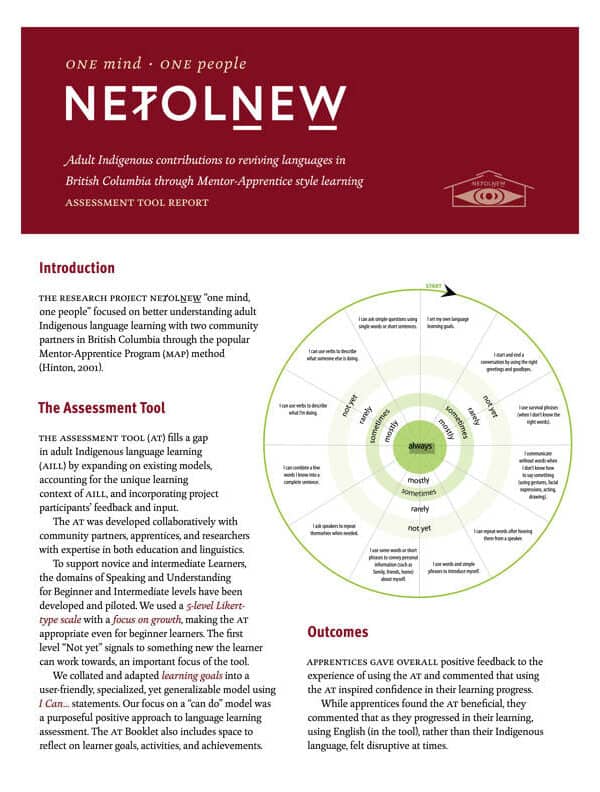
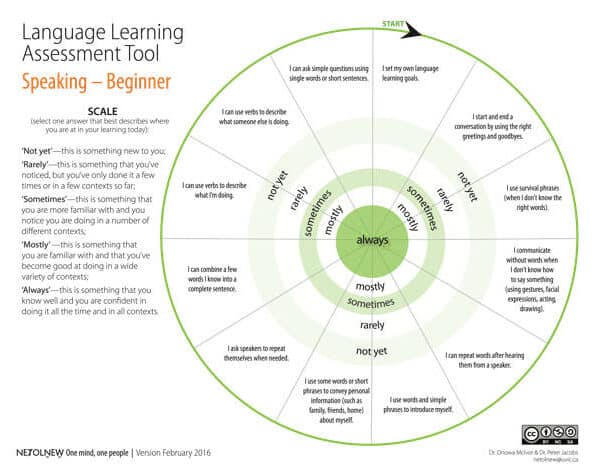
NEȾOLṈEW̱’s Indigenous Language Learning Assessment Tool is designed for learner-driven approaches like the Mentor/Master-Apprentice Program (MAP) where it is the learner’s responsibility to...
ÍY SȻÁĆEL, Gilakas'la, Ha7lh Skwáyel, tanisi (greetings) - If you are an adult learner of an Indigenous language, the following pages are intended to help you understand where you are at in your ...
This annotated bibliography aims to contribute to a better understanding of and document current trends as well as gaps in the published literature on Indigenous language use and learning and their co...
Since time immemorial, Indigenous languages have thrived in their homelands. In the land now called Canada, more than 500 years ago foreigners arrived from lands afar and brought with them their langu...
We look forward to reconnecting with Partners and collaborators in person on Wednesday, June 6th, at our All Partners’ Gathering. We will meet in Lethbridge, AB, taking advantage of the Stabilizing ...
The time has come for radical change in Indian education. Our aim is to make education relevant to the philosophy and needs of Indian people. We want education to give our children a strong sense of i...
One contemporary strategy for reversing language shift undertaken by Indigenous communities includes engaging with educational institutions. In Canada language revitalisation strategies in Indigenous ...
Increasingly, adult Indigenous language learners are being identified as the “missing generation” of learners who hold great potential to contribute to the revival of Indigenous languages by actin...
Although there are numerous ethical guidelines for research with Indigenous communities, not all research is conducted in an ethical, culturally respectful, and effective way. To address this gap, we ...